



Plant-Based Exosomes for Hair Loss: Do They Really Work?
But do plant-based exosomes actually help hair grow, or are they simply another trending ingredient in the hair restoration industry?
The short answer is: early research is promising, but plant-based exosomes are not yet a proven cure for hair loss. Small clinical studies have reported improvements in hair density and regrowth, but researchers still need larger, well-controlled studies to determine how effective these treatments are, how long the results last, and which formulations work best.
A 2025 randomized controlled trial involving 20 men with androgenetic alopecia found that a formulation containing extracts from Ecklonia cava and Thuja orientalis produced a greater increase in hair counts than placebo after four treatment sessions. However, the study was small, so its results should be considered preliminary rather than definitive.
What Are Plant-Based Exosomes?
Exosomes are microscopic extracellular vesicles that cells release to communicate with other cells. They can carry biological molecules such as proteins, lipids, messenger RNA, and microRNAs.
When people talk about plant-based exosomes, they are generally referring to extracellular vesicles or vesicle-like particles obtained from plants or plant derived materials.
These particles are being investigated because they may contain bioactive compounds capable of influencing cellular signaling, inflammation, oxidative stress, and tissue regeneration.
It is also important to understand that the terms “exosomes” and “extracellular vesicles” (EVs) are sometimes used interchangeably in the cosmetic and hair-restoration industry, although they are not necessarily identical scientifically.
For this reason, consumers should look beyond the word “exosome” on a treatment label and ask what the product actually contains, where it comes from, how it is manufactured, and what clinical evidence supports it.
How Could Plant-Based Exosomes Help With Hair Loss?
Hair growth is controlled by a complex interaction between hair follicle cells, growth factors, signaling pathways, hormones, blood supply, and the surrounding scalp environment.
Researchers believe extracellular vesicles may influence some of these processes through the biological molecules they carry.
Potential mechanisms being investigated include:
1. Supporting Hair Follicle Activity
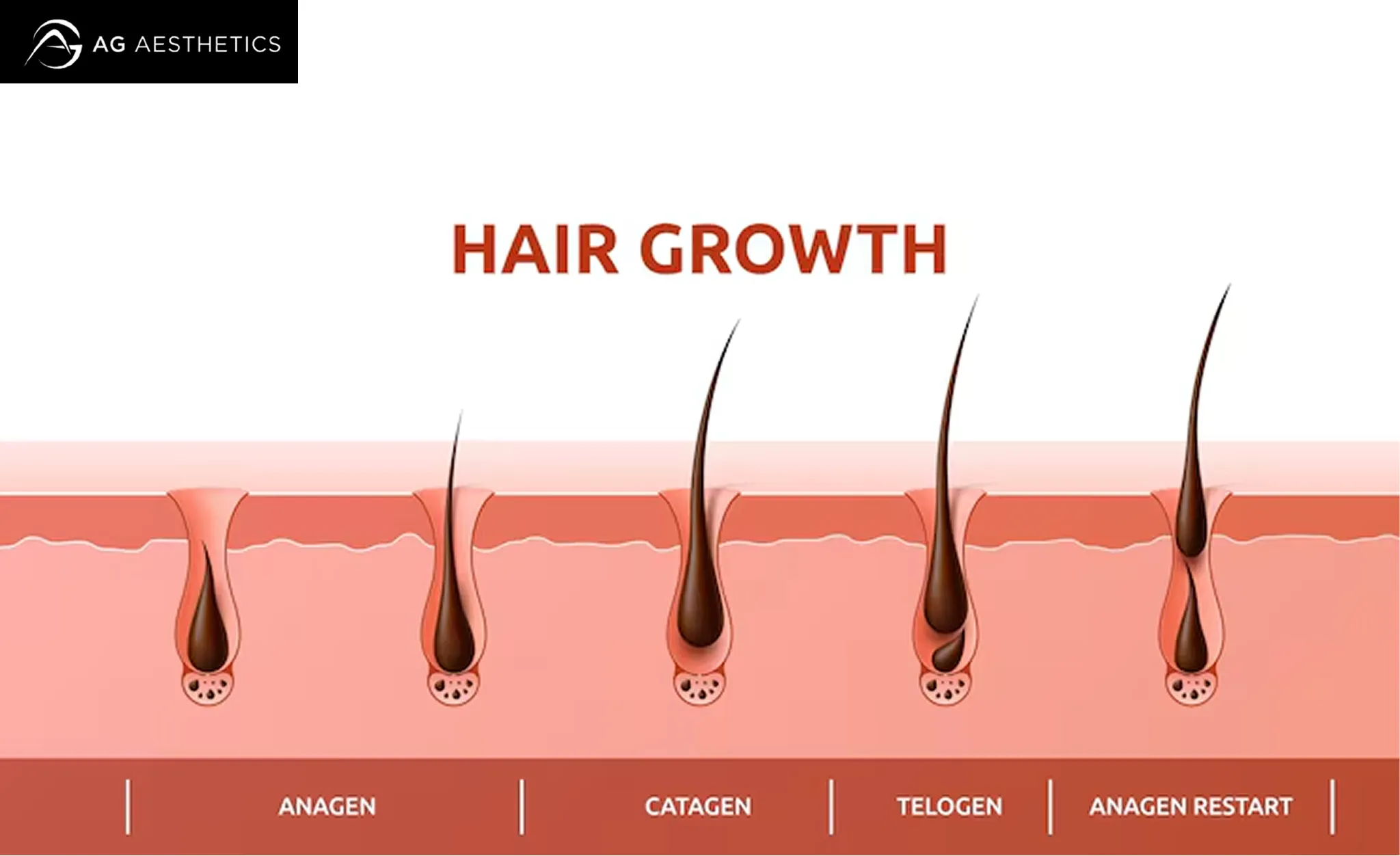
Hair follicles move through different phases of the hair growth cycle. During the anagen phase, follicles actively produce hair.
Research on exosome-based therapies suggests that extracellular vesicles may influence signaling between cells involved in follicle growth, including dermal papilla cells and follicular stem cells.
2. Influencing Growth-Related Signaling Pathways
Preclinical research has linked exosome activity with pathways involved in hair follicle regeneration, including Wnt/β-catenin and Sonic Hedgehog signaling.
These pathways are important because they participate in the regulation of follicle development and the hair growth cycle. However, demonstrating a biological mechanism in laboratory or animal studies does not automatically prove that a treatment will produce meaningful hair growth in humans.
Recent reviews continue to describe these mechanisms as promising areas of investigation rather than established clinical treatment mechanisms.
3. Supporting the Scalp Environment
Some extracellular vesicle formulations are being studied for their potential effects on inflammation, cellular communication, and tissue repair.
A healthier scalp environment may support normal follicle function, although this does not mean plant-based exosomes can reverse every type of hair loss.
4. Delivering Bioactive Molecules
One of the reasons exosomes have attracted attention in regenerative medicine is their ability to carry signaling molecules between cells.
Researchers are investigating whether this natural communication system can be used to influence cells around damaged or miniaturized hair follicles.
What Does the Research Say About Plant Based Exosomes for Hair Loss?
The research is encouraging, but it is still developing.
A 2025 randomized controlled trial investigated an exosome-containing plant extract formulation made with Ecklonia cava and Thuja orientalis in 20 men with Norwood grade 2–3 androgenetic alopecia.
Participants received four treatments at two week intervals. At week 16, the treatment group showed a statistically significant increase in hair count compared with baseline and a greater change than the placebo group. No notable adverse effects were reported during the study.
However, there are important limitations. The study involved only 20 participants and followed them for a relatively short period. Therefore, the results cannot establish how plant-derived exosome treatments compare with established hair-loss therapies over the long term.
A 2025 systematic review of clinical studies on exosome-based hair restoration identified 11 clinical studies, including randomized trials, prospective studies, retrospective studies, case series, and case reports. The review found improvements in at least one hair parameter across the included studies, but also emphasized differences in study design, exosome sources, treatment protocols, and follow up periods.
More recently, a 2026 retrospective case series evaluated a plant-derived extracellular vesicle formulation delivered through microinfusion in 20 adults with androgenetic alopecia. The researchers reported favorable subjective and investigator-assessed outcomes, but because the study was retrospective and had no placebo control, it cannot establish that the treatment itself caused the observed improvements.
This distinction is important: positive early results are not the same as definitive proof of effectiveness.
Plant Based Exosomes vs. Stem Cell Derived Exosomes
Not all exosome treatments are the same.
Research has investigated extracellular vesicles from several biological sources, including:
- Plant derived materials
- Adipose-derived stem cells
- Umbilical cord-derived cells
- Bone marrow-derived cells
- Hair follicle cells
- Dermal papilla cells
- Placental tissue
Much of the clinical literature on exosome therapy for hair loss has focused on mammalian or stem cell-derived sources rather than plant derived products.
A systematic review published in 2025 found that clinical studies involving different exosome sources showed improvements in hair density and thickness, but the authors emphasized that differences between studies make direct comparisons difficult.
Therefore, it would be inaccurate to assume that evidence supporting one type of exosome therapy automatically proves that every plant based exosome product will produce the same results.
Can Plant Based Exosomes Regrow Lost Hair?
Potentially, but this depends heavily on the cause and stage of hair loss.
For people with androgenetic alopecia, also known as male or female pattern hair loss, treatment aims to slow follicle miniaturization and maintain or improve hair density.
If a follicle is still functioning but producing increasingly thin hairs, a regenerative treatment may potentially improve its activity.
However, a treatment should not be marketed as being able to “reactivate every dead hair follicle.”
Long-standing, advanced hair loss may involve extensive follicular miniaturization or permanent follicular destruction, depending on the condition. In such cases, expectations need to be realistic.
This is why diagnosing the cause of hair loss should come before choosing an advanced treatment.
What Types of Hair Loss Might Be Treated?
Exosome-based treatments are primarily being investigated for androgenetic alopecia, but researchers are also studying them in other forms of hair loss.
Potential areas of investigation include:
- Male pattern hair loss
- Female pattern hair loss
- Nonscarring alopecia
- Chemotherapy-associated hair loss
- Other conditions involving impaired follicle function
However, evidence varies significantly between these conditions.
A treatment showing promising results for androgenetic alopecia should not automatically be assumed to work for alopecia areata, telogen effluvium, scarring alopecia, or hair loss caused by nutritional deficiencies.
The underlying cause matters.
How Is Plant Based Exosome Therapy for Hair Loss Performed?
The exact procedure depends on the formulation and clinic.
Some approaches use topical application, while others combine extracellular vesicle formulations with procedures designed to improve delivery into the scalp.
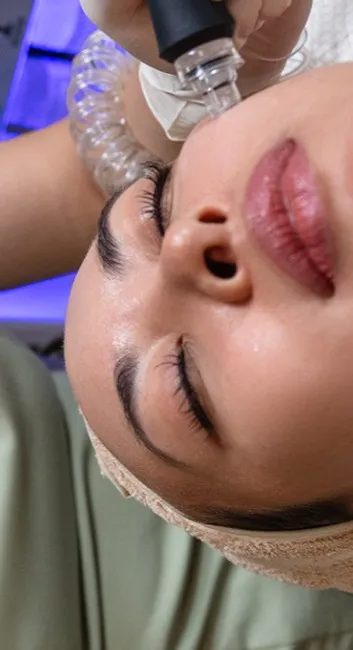
One method currently being investigated is microneedling or microinfusion, which creates controlled microscopic channels in the skin and may help deliver a topical formulation more directly.
The 2026 plant-derived extracellular vesicle case series used a microinfusion technique and reported that the treatment was generally well tolerated, although mild procedural pain occurred in some patients.
Because protocols vary, there is currently no universally standardized exosome treatment schedule for hair loss.
The number of sessions, concentration, delivery method, interval between treatments, and formulation can all differ.
How Long Does It Take to See Results?
Hair does not grow overnight, so regenerative hair treatments generally require patience.
Clinical studies of exosome-based treatments have used follow-up periods ranging from several weeks to months. Some studies have reported improvements in hair density or thickness within a few months, but the timing and magnitude of response vary.
For example, the 2025 plant-extract randomized trial assessed outcomes at week 16 after four treatment sessions.
It is therefore unrealistic to expect dramatic hair regrowth within a few days or a couple of weeks.
Hair growth should usually be evaluated using consistent photographs, hair-density measurements, or trichoscopy rather than relying only on day-to-day visual changes.
Are Plant Based Exosomes Safe?
Early clinical studies have generally reported good tolerability, but the safety question is not completely settled.
A 2025 systematic review found no serious adverse events among the included hair-loss studies, although the researchers emphasized that the evidence base was limited by small sample sizes, inconsistent protocols, and short follow up periods.
Possible short-term effects can depend on how the treatment is delivered. For example, procedures involving microneedling or microinfusion may cause:
- Temporary redness
- Mild swelling
- Tenderness
- Temporary scalp discomfort
- Minor irritation
The formulation itself may also contain ingredients capable of causing irritation or allergic reactions.
The safety of an exosome product therefore depends not only on the word “exosome” but also on its source, purification, manufacturing process, sterility, formulation, and method of administration.
What Should You Ask Before Getting an Exosome Hair Treatment?
Because exosome based hair treatments are still an emerging area, consumers should ask detailed questions before paying for treatment.
Consider asking:
What is the source of the exosomes?
Is the product plant derived, stem cell derived, or another type of extracellular vesicle formulation?
Is there published human research on this exact formulation?
Evidence from a completely different product does not necessarily prove that a particular clinic’s product works.
How is the product manufactured?
Ask about purification, sterility, storage, quality control, and batch consistency.
What condition is being treated?
A reputable hair loss evaluation should identify whether the problem is androgenetic alopecia, telogen effluvium, alopecia areata, nutritional deficiency, scalp disease, or another cause.
What results are realistic?
Be cautious of claims promising guaranteed regrowth, permanent results, or dramatic transformation in a short period.
How many sessions are required?
Ask for the complete treatment protocol rather than focusing only on the price of one session.
Plant Based Exosomes vs. Minoxidil
Minoxidil has been studied for decades and is an established treatment option for certain types of hair loss.
Plant-based exosomes are much newer.
The difference is important because the amount of evidence behind a treatment matters when deciding how much confidence to place in it.
Exosome research is exploring a potentially regenerative approach, while minoxidil has a much longer history of clinical use.
This does not mean that every person will respond equally to minoxidil or that emerging treatments have no value. It means that patients should distinguish between established treatments and experimental or emerging treatments when discussing options with a dermatologist.
Are Plant Based Exosomes a Cure for Hair Loss?
No.
At this stage, it is more accurate to describe plant-based exosomes as an emerging hair restoration approach rather than a proven cure for hair loss.
Current research suggests that extracellular vesicles may influence biological processes involved in hair follicle function, and early clinical studies have reported improvements in hair density and appearance.
However, researchers still need larger randomized controlled trials, standardized formulations, longer follow-up periods, and better comparisons with established treatments.
A 2026 systematic review of exosome-based approaches for androgenetic alopecia reached a similar conclusion: early clinical findings are encouraging, but small sample sizes, inconsistent study designs, manufacturing differences, and limited long-term data remain important challenges.
The Bottom Line: Do Plant Based Exosomes Really Work?
Plant based exosomes may help support hair growth, but the current evidence is not strong enough to call them a proven cure for hair loss.
Small clinical studies have produced encouraging findings. In particular, a 2025 randomized trial of a plant-extract exosome formulation found greater hair-count improvement than placebo after 16 weeks. Newer research involving plant-derived extracellular vesicles and microinfusion has also reported favorable early results.
At the same time, the overall evidence base remains relatively small. Different products use different sources, concentrations, delivery techniques, and treatment schedules, making it difficult to determine which approach is most effective.
If you are considering plant-based exosomes for hair loss, the most important step is to identify the underlying cause of your hair loss first. A dermatologist or qualified hair-loss specialist can determine whether you have androgenetic alopecia or another condition and discuss both established and emerging treatment options.
For now, plant-derived exosomes are best viewed as a promising area of regenerative hair research not a guaranteed solution for baldness.
Frequently Asked Questions
What are plant-based exosomes for hair loss?
Plant-based exosomes generally refer to extracellular vesicles or vesicle-like particles derived from plants or plant materials. Researchers are investigating their potential to influence cellular communication and processes involved in hair follicle growth.
Do plant-based exosomes regrow hair?
Early research suggests they may improve hair density in some people, particularly those with androgenetic alopecia. However, current clinical evidence is limited, and larger studies are needed to confirm their effectiveness.
How long do plant-based exosomes take to work?
Research protocols vary, but some studies have evaluated results after several months. A 2025 randomized trial involving a plant-extract exosome formulation assessed hair outcomes at 16 weeks.
Are plant-based exosomes better than minoxidil?
There is currently not enough evidence to make a direct conclusion that plant-based exosomes are better than minoxidil. Minoxidil has substantially more established clinical evidence and a much longer history of use.
Are exosomes FDA-approved for hair loss?
The regulatory status of a particular exosome or extracellular-vesicle product depends on the product, ingredients, intended use, and jurisdiction. Consumers should verify the regulatory status of the specific treatment rather than assuming that a clinic’s use of the term “exosome” means the product has been approved for hair loss.
Can exosomes completely reverse baldness?
There is no strong clinical evidence showing that plant-based exosomes can completely reverse advanced baldness. Results may depend on the cause and stage of hair loss, and expectations should remain realistic.
Should I try plant-based exosomes for hair loss?
If you are considering the treatment, discuss it with a dermatologist who can diagnose the cause of your hair loss and explain the evidence, potential benefits, risks, and alternatives. Because exosome-based hair treatments are still an emerging field, it is particularly important to understand what specific formulation and procedure a clinic is offering.