



Hair Thinning in Men and Women: Causes, Early Signs & Treatment Options
What Is Hair Thinning?
Hair thinning refers to a reduction in hair density, thickness, or coverage on the scalp. It can happen gradually as individual follicles produce progressively finer strands, or it can appear more suddenly when excessive shedding occurs.
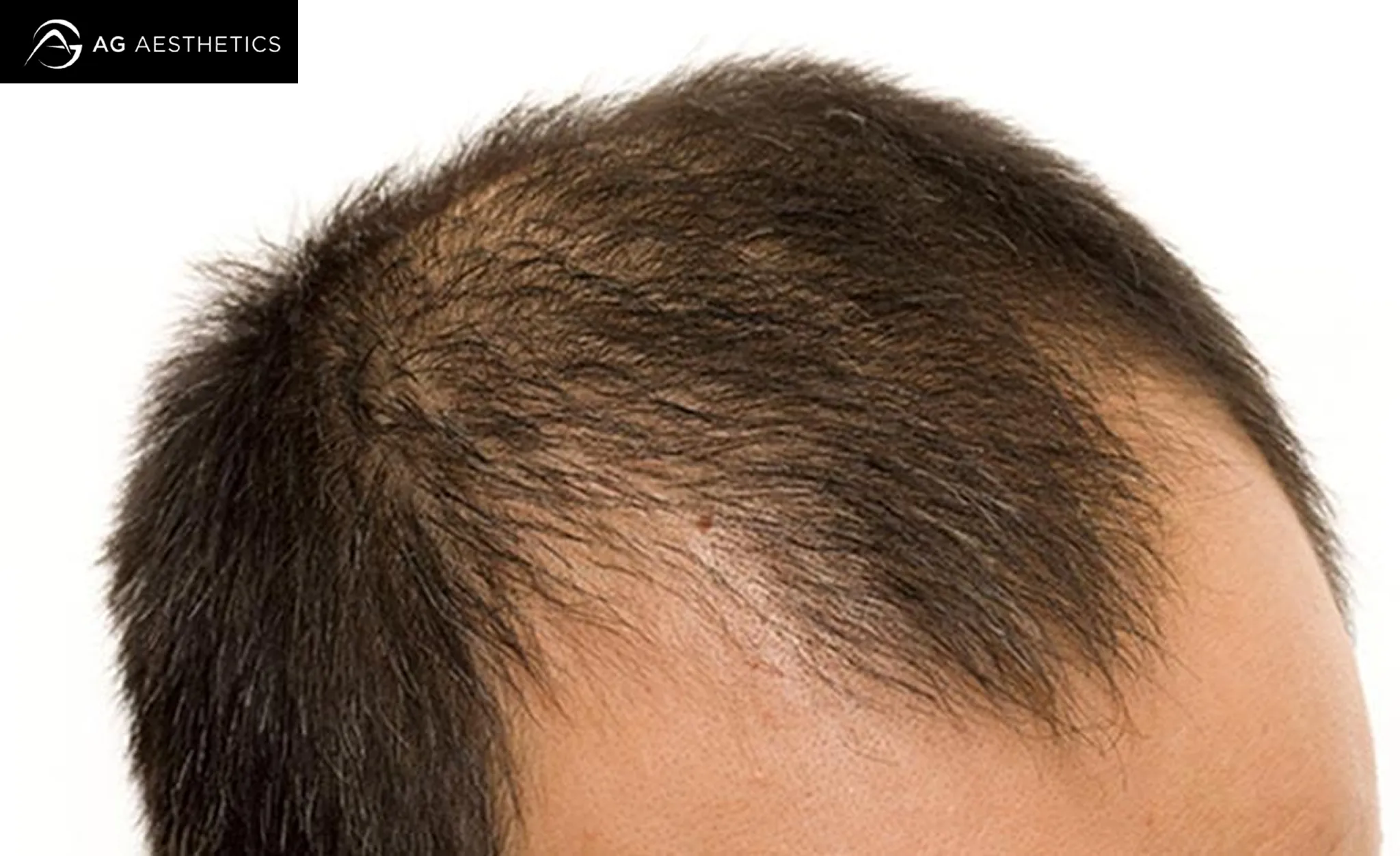
Not all hair shedding means permanent hair loss. The American Academy of Dermatology notes that losing approximately 50 to 100 hairs per day can be normal because hair naturally moves through cycles of growth and shedding. However, visible changes such as a receding hairline, widening part, bald spot, or overall reduction in density can indicate hair loss.
Hair thinning can affect:
- The hairline and temples
- The crown or top of the scalp
- The central part
- The entire scalp
- Areas affected by repeated pulling or tension
- Previously dense areas that gradually become more transparent
Is Hair Thinning Different in Men and Women?
Yes. Although men and women can experience many of the same types of hair loss, the pattern often differs.
Hair Thinning in Men
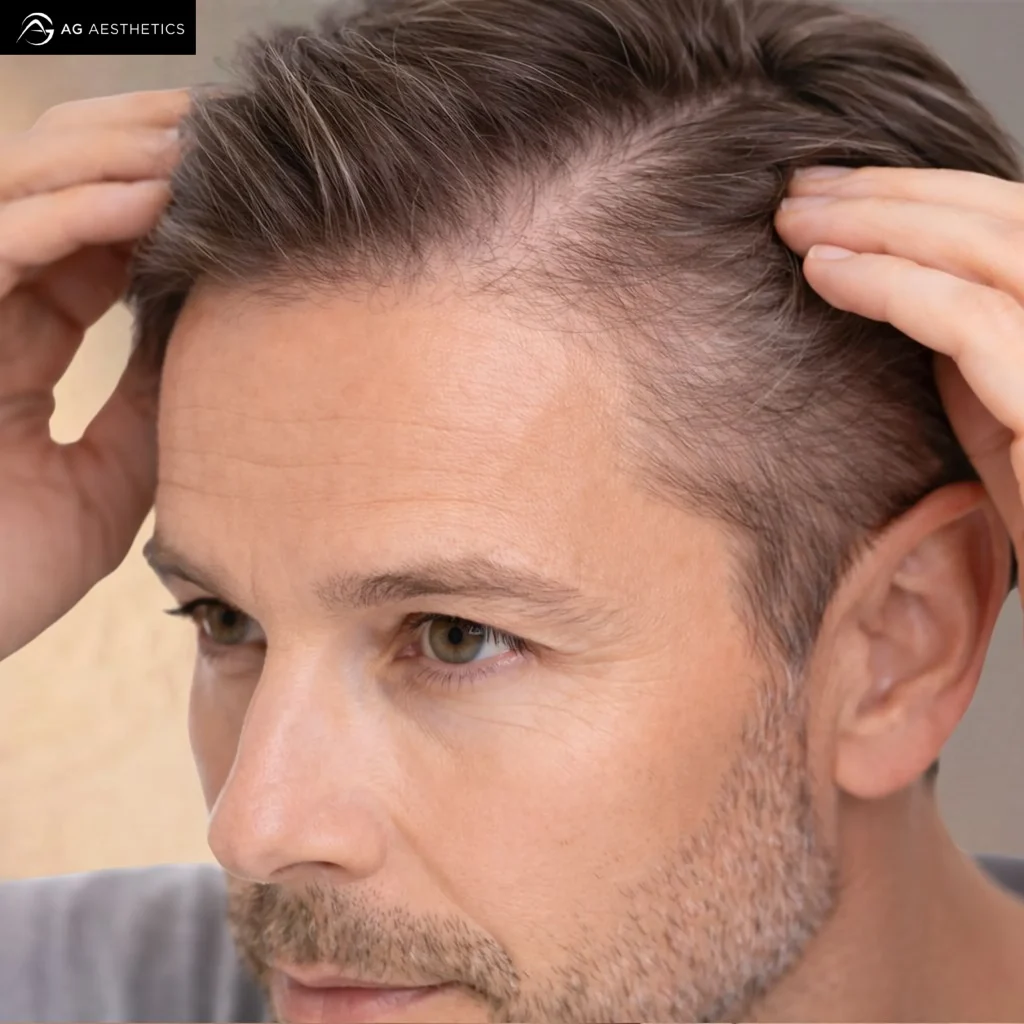
Male pattern hair loss, also called androgenetic alopecia, commonly affects the hairline, temples, and crown. A receding hairline or gradually developing bald spot may be one of the first noticeable signs.
The condition can develop slowly over many years. In some men, however, noticeable changes can begin during the late teens or twenties.
Hair Thinning in Women
Female pattern hair loss commonly produces diffuse thinning across the top of the scalp rather than a strongly receding frontal hairline.
Early signs may include:
- A widening central part
- A thinner ponytail
- Reduced volume
- More visible scalp around the part
- Gradual thinning across the crown
Female pattern hair loss is the most common cause of hair loss in women and can begin earlier than expected, although it is particularly common during midlife..
What Causes Hair Thinning in Men and Women?
There isn’t one universal cause of thinning hair. Some people may also have more than one contributing factor.
1. Hereditary Hair Loss
Genetic or hereditary hair loss is the most common cause of hair loss worldwide and affects both men and women.
In androgenetic alopecia, genetically susceptible hair follicles gradually shrink. Over time, affected follicles may produce finer and shorter hairs, leading to reduced density.
Men typically develop a receding hairline, crown thinning, or both, while women more often experience widening of the central part and diffuse thinning across the top of the scalp.
2. Hormonal Changes
Hormonal changes can influence the hair-growth cycle.
In women, changes associated with pregnancy, postpartum recovery, menopause, and certain hormonal conditions may contribute to increased shedding or thinning.
In men, sensitivity to dihydrotestosterone (DHT) plays an important role in androgenetic hair loss.
3. Stress and Major Illness
Significant physical or emotional stress can trigger increased hair shedding.
Hair shedding may occur several weeks or months after events such as:
- A major illness
- High fever
- Surgery
- Significant weight loss
- Severe stress
- Certain medical treatments
In some cases, hair growth returns as the underlying trigger resolves.
4. Nutritional Deficiencies
Insufficient intake or absorption of certain nutrients can contribute to hair problems.
Depending on the individual, a doctor may investigate potential deficiencies involving nutrients such as iron or other vitamins and minerals, particularly when hair loss is diffuse or accompanied by other symptoms.
Taking supplements without identifying a deficiency is not always helpful. The AAD cautions that excessive amounts of certain nutrients can actually worsen hair loss.
5. Scalp Conditions
The scalp environment can influence hair health. Inflammation, infection, severe dandruff, psoriasis, and other scalp disorders may contribute to shedding or hair loss.
Treating an underlying scalp condition can therefore be an important part of managing hair thinning.
6. Tight Hairstyles and Hair Damage
Repeated tension from tight hairstyles can cause traction alopecia.
Frequent chemical treatments, excessive heat, aggressive brushing, or other damaging practices can also contribute to hair breakage, which may make the hair appear thinner.
7. Certain Medications and Medical Conditions
Some medications and medical conditions can cause temporary or persistent hair loss.
Autoimmune conditions such as alopecia areata, for example, can cause sudden patches of hair loss. Other medical conditions may produce diffuse shedding.
Because the treatment depends on the cause, sudden or unusual hair loss should be evaluated rather than treated solely with cosmetic products.
What Are the Early Signs of Hair Thinning?
Hair thinning can be subtle at first. Recognising the early signs can make it easier to investigate the cause and consider treatment before more extensive loss develops.
Common early signs include:
A Receding Hairline
For men, the temples and frontal hairline may gradually move backward.
A Widening Hair Part
For women, a widening central part can be one of the earliest visible signs of female pattern hair loss.
A Thinner Ponytail
If your ponytail suddenly feels smaller or requires an extra loop to hold the same amount of hair, it may indicate reduced hair density.
Increased Scalp Visibility
The scalp may become increasingly visible under bright light, after showering, or when the hair is styled.
More Hair Shedding
An increase in hair found on your pillow, clothing, brush, or shower floor may indicate excessive shedding, particularly when it persists.
Gradually Reduced Hair Density
Some people notice that their hair no longer looks as full as it did in photographs from previous years.
The AAD identifies gradual thinning, a growing bald spot, a receding hairline, a widening part, and a thinner ponytail among the common signs of hair loss.
Hair Shedding vs Hair Thinning: What's the Difference?
Hair shedding and hair thinning are related but not identical.
Hair shedding refers to an increased number of hairs entering the shedding phase and falling out.
Hair thinning refers to a reduction in the overall density or thickness of the hair.
A person can experience excessive shedding without developing permanent hair loss. Conversely, hereditary hair loss may progress gradually without dramatic shedding.
Some people experience both.
That distinction matters because the appropriate treatment depends on what is happening within the hair-growth cycle and why it is happening.
When Should You See a Doctor About Hair Thinning?
It is worth seeking professional evaluation if you notice:
- Rapid or sudden hair loss
- Circular or patchy bald spots
- A rapidly receding hairline
- Persistent excessive shedding
- Significant scalp itching, scaling, pain, or inflammation
- Eyebrow or eyelash loss
- Hair loss following a new medication
- Hair thinning accompanied by other unexplained symptoms
A dermatologist can examine the scalp and hair, ask about medical and family history, and determine whether additional testing is appropriate. Depending on the suspected cause, blood tests or a scalp biopsy may sometimes be recommended.
Hair Thinning Treatment Options
There is no single treatment that works for every type of hair loss. Treatment should be based on the underlying cause, the pattern and severity of thinning, and the individual’s circumstances.
1. Minoxidil
Minoxidil is one of the most established treatments for hereditary hair loss.
It can help stimulate hair growth and reduce further hair loss in some people. Results generally take time, with the AAD noting that it may take approximately six to 12 months to evaluate the response. Continued use is generally needed to maintain its benefits.
Minoxidil is used for both male and female pattern hair loss, although the appropriate formulation and use can differ.
2. Finasteride
Finasteride is a prescription medication used for male pattern hair loss. It works by reducing the conversion of testosterone into DHT, a hormone involved in the miniaturisation of susceptible hair follicles.
It is not appropriate for everyone and can cause side effects, so it should be discussed with a qualified medical professional. The AAD notes that finasteride is FDA-approved for male pattern hair loss and that treatment needs to be continued to maintain its benefits.
3. Hair Transplantation
For appropriate candidates with established pattern hair loss, hair transplantation can provide a surgical method of restoring hair to areas of reduced density.
Unlike treatments that depend on ongoing application, transplanted follicles can provide permanent growth when successful, although the procedure is not appropriate for every person or every type of hair loss.
4. Non-Surgical Hair and Scalp Treatments
People with early-stage thinning may also explore non-surgical treatments designed to support the scalp environment and hair follicles.
These may include regenerative or biomimetic approaches, microneedling-based protocols, and specialised topical formulations.
The important distinction is that emerging treatments should not automatically be considered substitutes for established medical therapies. Their evidence, mechanisms, formulations, and treatment protocols can differ considerably.
Can Plant-Based Exosome Treatments Help With Hair Thinning?
Plant based exosome treatments are an emerging area of hair and scalp care.
DE|RIVE, offered by AG Aesthetics Singapore, is positioned as a plant-based, biomimetic exosome treatment designed to support natural hair growth, follicle health, scalp hydration, thickness, and density. The treatment is described by AG Aesthetics as focusing on scalp health and hair follicle support without surgery.
According to AG Aesthetics, DE|RIVE contains biomimetic peptides, plant extracts, essential oils, vitamins, minerals, antioxidants, hydrating agents, and natural DHT blockers. It can be used in-office alongside treatments such as microneedling or as a take-home daily application.
This makes DE|RIVE particularly relevant to people looking for a non-surgical approach to early or moderate hair thinning while also focusing on scalp health.
However, the cause of hair loss still matters. A professional assessment can help determine whether a plant based hair and scalp treatment is appropriate for an individual’s pattern of thinning.
How DE|RIVE Supports Hair and Scalp Health
DE|RIVE is designed around a biomimetic, plant-based approach rather than a surgical hair-restoration procedure.
AG Aesthetics describes several areas of focus:
Supports Hair Follicle Health
DE|RIVE is formulated to support the follicular environment and natural hair-growth process.
Supports Hair Thickness and Density
The treatment is designed to promote the appearance of fuller, thicker hair by supporting hair follicles and the scalp.
Nourishes and Hydrates the Scalp
A healthy scalp environment is an important part of maintaining healthy-looking hair. DE|RIVE is formulated with hydrating and nourishing ingredients to support scalp wellness.
Supports Reduced Shedding
AG Aesthetics positions DE|RIVE as a treatment that can help reduce hair loss and shedding by supporting the scalp environment and hair follicles.
How Is DE|RIVE Used?
DE|RIVE can be incorporated into an in-office treatment plan, including alongside microneedling, or used as a take-home hair and scalp serum.
The take-home system is designed for regular application. AG Aesthetics currently recommends twice-daily application for its 60ml take-home system.
Because hair grows gradually, consistency is important when evaluating any hair-thinning treatment.
Can Hair Thinning Be Reversed?
Sometimes.
The potential for regrowth depends heavily on the underlying cause and the condition of the affected follicles.
Temporary shedding caused by certain illnesses, stressors, or other triggers may improve once the underlying issue is resolved. Pattern hair loss, on the other hand, is typically progressive without treatment, although treatment can slow progression and stimulate some regrowth.
When follicles have been significantly miniaturised or are no longer producing hair, the potential for regrowth can become more limited.
This is one reason early assessment and treatment can be important.
How to Choose a Hair Thinning Treatment
The right approach depends on several factors:
Identify the Cause
Before choosing a treatment, determine whether the thinning is genetic, hormonal, inflammatory, nutritional, stress-related, medication-related, or caused by another condition.
Consider the Pattern
A receding hairline, crown thinning, diffuse shedding, widening part, and patchy hair loss can have different causes.
Consider How Advanced the Thinning Is
Treatments may be more useful when follicles are still active and producing hair.
Consider Your Treatment Preferences
Some people prefer daily topical medication, while others may consider professional non-surgical treatments or, where appropriate, surgical restoration.
Consider Long-Term Maintenance
Many hair-loss treatments require continued use or maintenance to preserve results. Your provider can explain the expected treatment schedule and long-term approach.
Can Men and Women Use the Same Hair Thinning Treatments?
Not necessarily.
Although some treatments can be used by both men and women, the appropriate option can depend on the type of hair loss, medical history, age, hormonal status, pregnancy considerations, and other factors.
For example, minoxidil is used for both male and female pattern hair loss, while finasteride is primarily used for male pattern hair loss and requires medical supervision. The AAD also notes that women who are pregnant or planning pregnancy should avoid minoxidil.
This is why a personalised assessment is preferable to choosing a treatment based only on online recommendations.
How Early Should You Treat Hair Thinning?
Early intervention can matter.
With hereditary hair loss, affected follicles gradually become smaller. The AAD notes that treatment tends to work better when started early, before more extensive follicle miniaturisation occurs.
If you notice a widening part, receding hairline, crown thinning, persistent shedding, or reduced overall density, it can be useful to investigate the change rather than waiting until significant hair loss develops.
Frequently Asked Questions About Hair Thinning
What is the most common cause of hair thinning?
Hereditary hair loss, also called androgenetic alopecia or pattern hair loss, is the most common cause of hair loss in both men and women.
What are the first signs of hair thinning in men?
A receding hairline, thinning at the temples, or a developing bald spot around the crown can be early signs of male pattern hair loss.
What are the first signs of hair thinning in women?
A widening central part, reduced overall volume, and a thinner ponytail are common early signs of female pattern hair loss.
Can stress cause hair thinning?
Yes. Significant physical or emotional stress can trigger increased shedding. Depending on the cause, hair may recover after the underlying trigger is addressed.
Is hair thinning always permanent?
No. Some types of hair shedding are temporary and may resolve when the underlying cause is treated or removed. Other forms, such as hereditary hair loss, can be progressive without treatment.
Does minoxidil work for thinning hair?
Minoxidil can help reduce hair loss and stimulate some regrowth in people with certain types of hair loss, particularly hereditary hair loss. Results take time and continued use is generally necessary to maintain the benefits.
Can DE|RIVE be used for hair thinning?
DE|RIVE is designed by AG Aesthetics as a plant-based, biomimetic hair and scalp treatment that supports follicle health, scalp wellness, thickness, and density. It can be used in-office, including alongside microneedling, or as a take-home daily serum.
When should I see a dermatologist for hair thinning?
Consider professional evaluation when thinning is persistent, rapidly progressing, patchy, associated with scalp symptoms, or accompanied by other unexplained changes. Identifying the underlying cause is important because different types of hair loss require different treatments.
The Bottom Line
Hair thinning can affect men and women at different stages of life, and the pattern can vary considerably from one person to another. A receding hairline, widening part, thinner ponytail, increasing scalp visibility, or persistent shedding may be early signs worth investigating.
The most important step is identifying the cause. Established options such as minoxidil, prescription medications, PRP, and hair transplantation may be appropriate for certain types of hair loss, while non-surgical approaches such as plant-based biomimetic treatments can provide additional options for people focused on hair and scalp health.
DE|RIVE offers a plant-based approach designed to support hair follicle health, scalp hydration, hair thickness, and density as part of a broader hair-care strategy.
If you are experiencing hair thinning, a professional assessment can help determine the underlying cause and identify the most appropriate treatment approach for your individual needs.