



Can Exosomes Help Reduce Hair Shedding?
As regenerative treatments continue to develop, exosome therapy for hair loss has gained attention as a potential approach to supporting healthier hair follicles. But can exosomes actually help reduce hair shedding, and are they effective for hair regrowth?
The research so far is promising, but exosome therapy is still an emerging treatment. Understanding how it works, what the current evidence shows, and which types of hair loss may respond can help you make an informed decision.
What Are Exosomes?
Exosomes are extremely small extracellular vesicles that help cells communicate with one another. They can contain biologically active molecules, including proteins, growth factors, cytokines, and microRNAs.
In hair restoration research, exosomes are being studied for their potential ability to influence the cellular environment around hair follicles. Researchers believe that these signaling molecules may support processes involved in follicle activity, tissue repair, and the hair growth cycle.
Because of this regenerative potential, exosomes are being investigated as a possible non-surgical treatment for different forms of hair loss, particularly androgenetic alopecia, also known as pattern hair loss.

Is Hair Shedding the Same as Hair Loss?
Not necessarily.
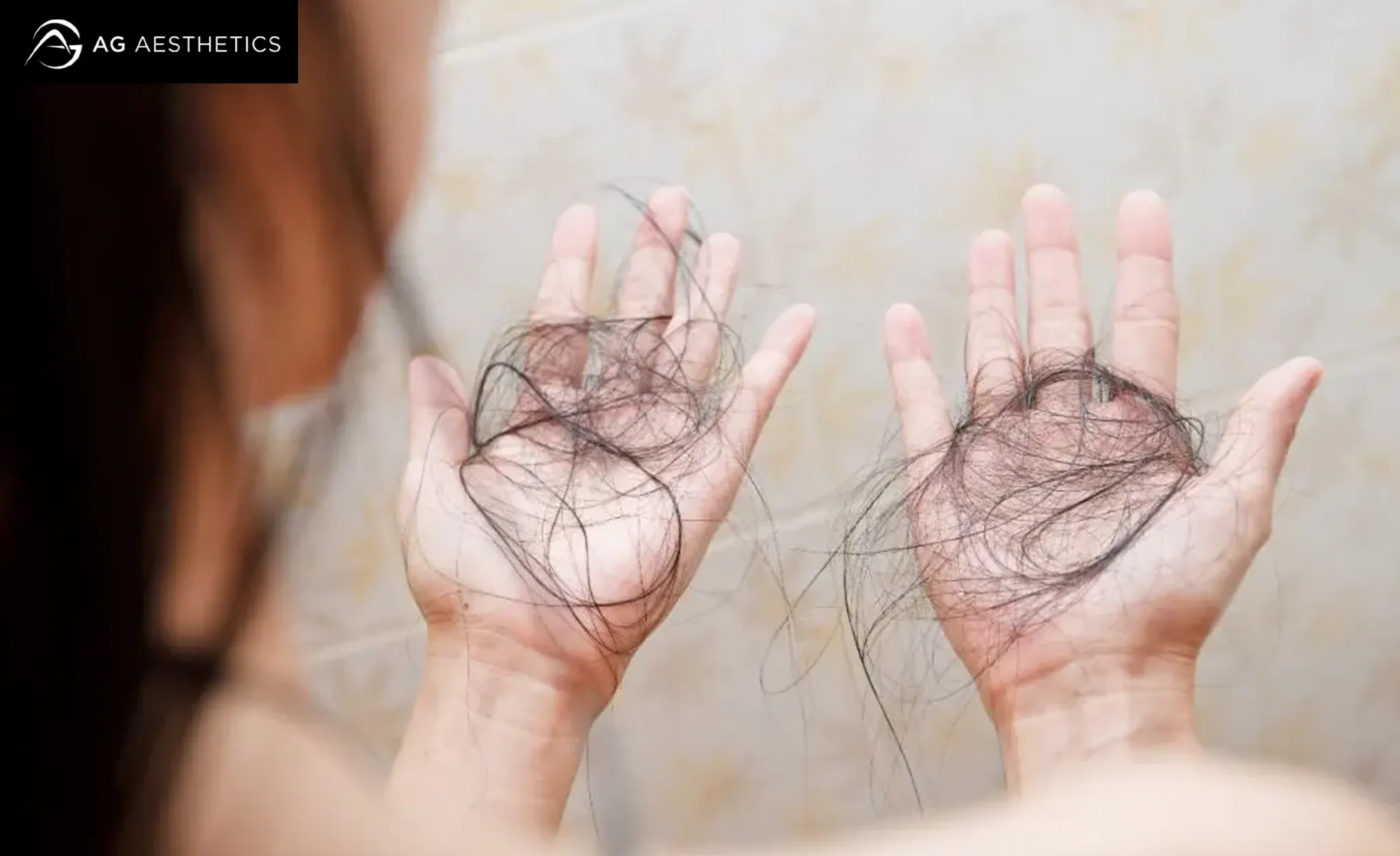
It is normal to lose a certain number of hairs every day as part of the natural hair growth cycle. However, excessive shedding can occur when a larger number of hairs prematurely enter the resting or shedding phase.
One example is telogen effluvium, which can develop after significant physical or emotional stress, illness, major weight loss, surgery, or other changes affecting the body.
Pattern hair loss is different. With androgenetic alopecia, hair follicles gradually become smaller and produce thinner, shorter hairs. This can lead to a gradual reduction in hair density, particularly around the hairline, temples, or crown.
Identifying the underlying cause is important because a treatment designed to support hair follicles may not address every reason for excessive shedding.
Can Exosomes Help Reduce Hair Shedding?
Early research suggests that exosome-based treatments may support the hair follicle environment and potentially improve hair density and thickness.
Recent clinical evidence has reported improvements in at least one hair-related measurement in the studies evaluated, including hair density and hair shaft thickness. However, researchers have also emphasized that the available studies are relatively small and use different sources, formulations, delivery methods, and treatment protocols.
This means that exosomes may have potential for hair regeneration and reducing the effects of certain types of hair loss, but it is too early to consider them a universally proven solution for hair shedding.
The potential benefit may also depend on why someone is shedding hair in the first place.
How May Exosomes Support Hair Growth?
Researchers are investigating several possible mechanisms behind exosome therapy for hair loss.
Supporting Hair Follicle Activity
Hair follicles depend on communication between different cells within the follicular environment. Exosomes can carry signaling molecules that may influence these cellular interactions.
Some laboratory research suggests that exosomes may encourage pathways associated with hair follicle growth and regeneration.
Supporting the Hair Growth Cycle
Hair follicles naturally move through different phases, including anagen, the active growth phase, and telogen, the resting phase.
Research suggests that certain exosome preparations may influence signaling pathways involved in follicle activity and potentially encourage follicles toward a growth-supporting environment.
Improving Hair Density and Thickness
Clinical studies have reported increases in hair density and improvements in hair shaft thickness following certain exosome-based treatments.
This is important because healthy-looking hair is influenced not only by the number of follicles but also by the thickness and quality of individual hairs.
Supporting the Scalp Environment
Exosomes contain various bioactive molecules that may influence inflammation, cellular communication, and tissue repair. Researchers are investigating whether these properties can help create a more supportive environment for hair follicles.
However, the exact mechanisms can vary depending on the source and preparation of the exosomes.
What Does the Research Say About Exosome Therapy for Hair Loss?
Research into exosomes and hair restoration has expanded significantly in recent years.
A 2025 systematic review of clinical evidence identified 11 clinical studies evaluating exosome-based interventions for hair growth. The studies included randomized controlled trials, prospective studies, retrospective studies, case reports, and case series. Improvements were reported in measures such as hair density and hair thickness, although the researchers noted substantial differences between the studies.
A newer 2026 systematic review examining exosome treatments for androgenetic alopecia also found promising early clinical results. Reported improvements included hair density and shaft thickness, while the authors emphasized the need for larger randomized controlled trials and standardized manufacturing and treatment protocols.
Earlier reviews similarly concluded that exosome therapy shows potential but that more high-quality human research is necessary.
Therefore, the current evidence can best be described as promising but still developing.
Who May Consider Exosome Hair Treatment?
Exosome therapy is primarily being investigated for non-scarring forms of hair loss, including pattern hair loss.
Someone experiencing gradual thinning around the crown, temples, or hairline may be evaluated for androgenetic alopecia. In some cases, regenerative treatments may be considered as part of a broader hair restoration plan.
However, people experiencing sudden or severe hair shedding should first determine the underlying cause.
A dermatologist or qualified hair-loss specialist may evaluate the scalp, hair pattern, medical history, medications, nutrition, hormonal factors, and other possible causes before recommending treatment.
Exosomes vs. Traditional Hair Loss Treatments
Exosome therapy is different from established hair-loss treatments such as minoxidil and other medical approaches.
Traditional treatments have a larger body of clinical evidence and are commonly used depending on the type and cause of hair loss. Exosome therapy is a newer regenerative approach that is still being studied.
For some patients, a specialist may consider regenerative treatments alongside established therapies rather than treating them as replacements.
The right approach depends on the individual’s diagnosis, stage of hair loss, scalp condition, medical history, and treatment goals.
Are Exosome Treatments Safe?
Available clinical studies have generally reported mild and temporary side effects, such as redness, irritation, swelling, or itching at the treatment area.
However, safety depends heavily on how the product is sourced, processed, stored, and administered. Different clinics may use different exosome products and protocols, which makes it difficult to compare treatments directly.
Because exosome-based treatments are still developing, patients should ask a qualified medical professional about the exact product being used, its source, preparation process, clinical evidence, potential risks, and regulatory status in their location.
Avoid choosing a treatment solely because it is advertised as a “stem cell” or “exosome” treatment.
How Long Does It Take to See Hair Results?
Hair growth is a gradual biological process, so results should not be expected immediately.
Clinical studies evaluating exosome therapy have used different follow-up periods, making it difficult to establish one universal timeline. Hair density and thickness may change gradually rather than overnight.
Your expected results can also depend on the cause and severity of hair loss, the condition of your follicles, the treatment protocol, and whether other hair-loss treatments are being used.
A specialist can provide a more realistic timeline after evaluating your scalp and hair-loss pattern.
Can Exosomes Stop Hair Shedding Permanently?
There is currently not enough evidence to say that exosome therapy can permanently stop hair shedding.
Hair shedding is a symptom rather than a single disease. If shedding is caused by stress, illness, nutritional problems, hormonal changes, medication, or another underlying condition, treating that cause is important.
For pattern hair loss, the goal of treatment may be to support existing follicles, improve hair density, and slow or manage progressive thinning.
Exosomes may become an important part of regenerative hair treatment in the future, but more long-term research is needed to determine how durable the results are.
What Should You Do If You Are Experiencing Excessive Hair Shedding?
If you suddenly notice significantly more hair than usual, don’t assume that you need an advanced hair restoration treatment immediately.
Start by identifying the potential cause.
A dermatologist can assess whether you are experiencing temporary excessive shedding, pattern hair loss, scalp disease, or another condition. Depending on your symptoms, they may recommend scalp examination, blood tests, or other diagnostic evaluations.
Once the cause is identified, your treatment plan can be tailored accordingly.
The Bottom Line
Can exosomes help reduce hair shedding?
Exosome therapy shows promising potential for supporting hair follicle activity, hair density, and hair thickness, particularly in research involving androgenetic alopecia and other non scarring forms of hair loss.
However, exosomes are still an emerging hair restoration treatment. Current clinical studies have produced encouraging findings, but differences in exosome sources, formulations, treatment methods, study sizes, and follow-up periods mean that more high-quality research is needed.
If you’re experiencing persistent hair shedding or thinning, the most important first step is determining the underlying cause. A qualified dermatologist or hair-loss specialist can help determine whether exosome therapy or another evidence based treatment is appropriate for your individual situation.
I’ve kept the wording medically cautious and consistent with the UK-English style of your previous hair-loss articles.