



Exosome Therapy vs. Minoxidil: How Do They Differ?
Although both are discussed in the context of hair growth, they are very different treatments.
Minoxidil is a well-established medication used for certain types of hair loss. Exosome therapy, meanwhile, uses extracellular vesicles or exosome-based formulations designed to influence cellular communication and the hair follicle environment.
So, exosome therapy vs. minoxidil — how do they actually differ?
The answer comes down to their mechanism of action, clinical evidence, application, treatment protocols, and the type of hair-loss concerns they are intended to address.
What Is Minoxidil?
Minoxidil is a topical medication commonly used to treat androgenetic alopecia, also known as male pattern hair loss and female pattern hair loss.
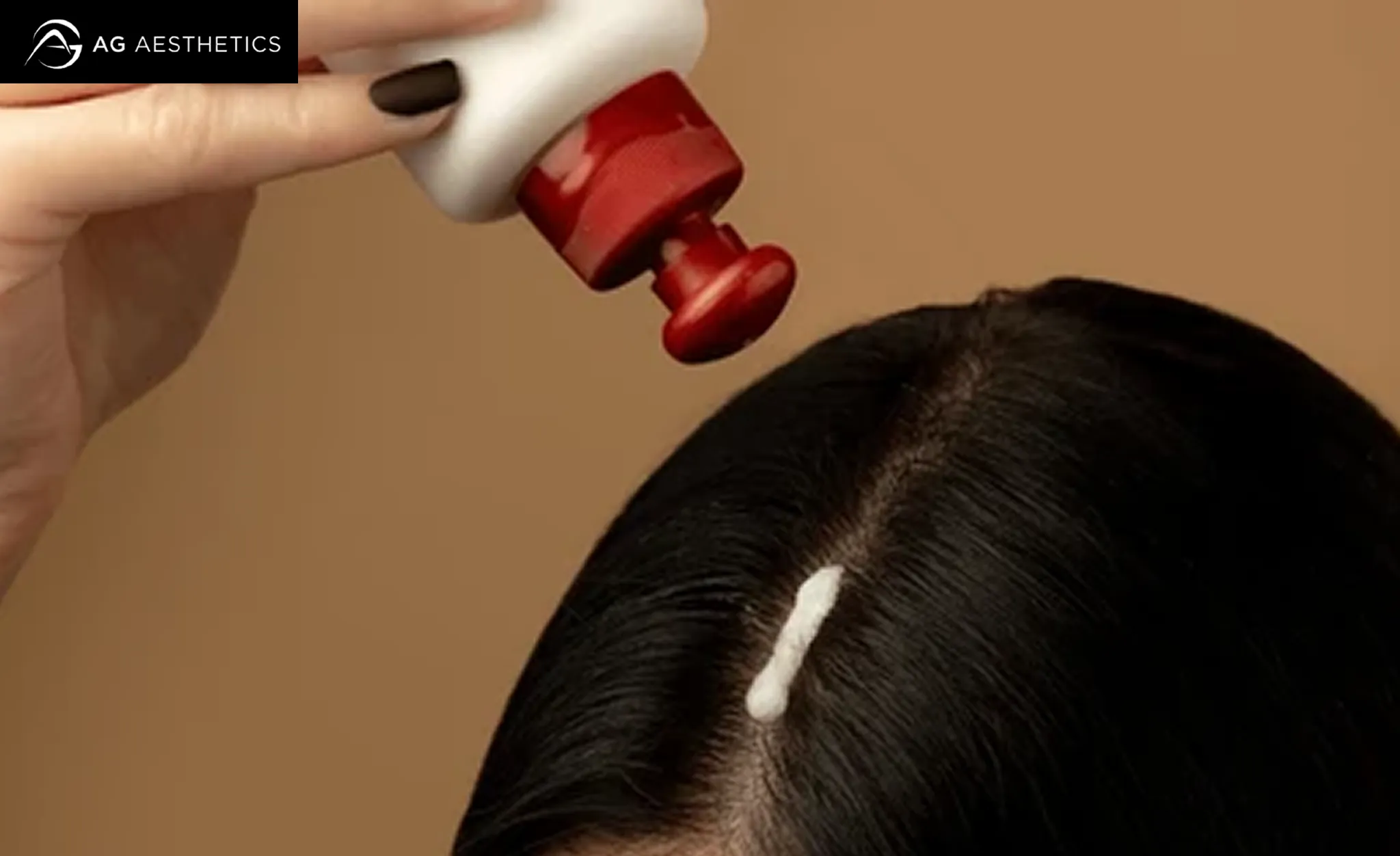
It is available in different formulations and concentrations, most commonly as a topical solution or foam.
Minoxidil is thought to influence the hair follicle and prolong the anagen, or active growth, phase of the hair cycle. It can help maintain existing hair and, in some people, improve hair density.
Because minoxidil has been studied for many years, there is considerably more clinical evidence supporting its use than there is for newer regenerative hair treatments.
However, response varies between individuals, and continued treatment is generally needed to maintain benefits.
What Is Exosome Therapy for Hair Loss?
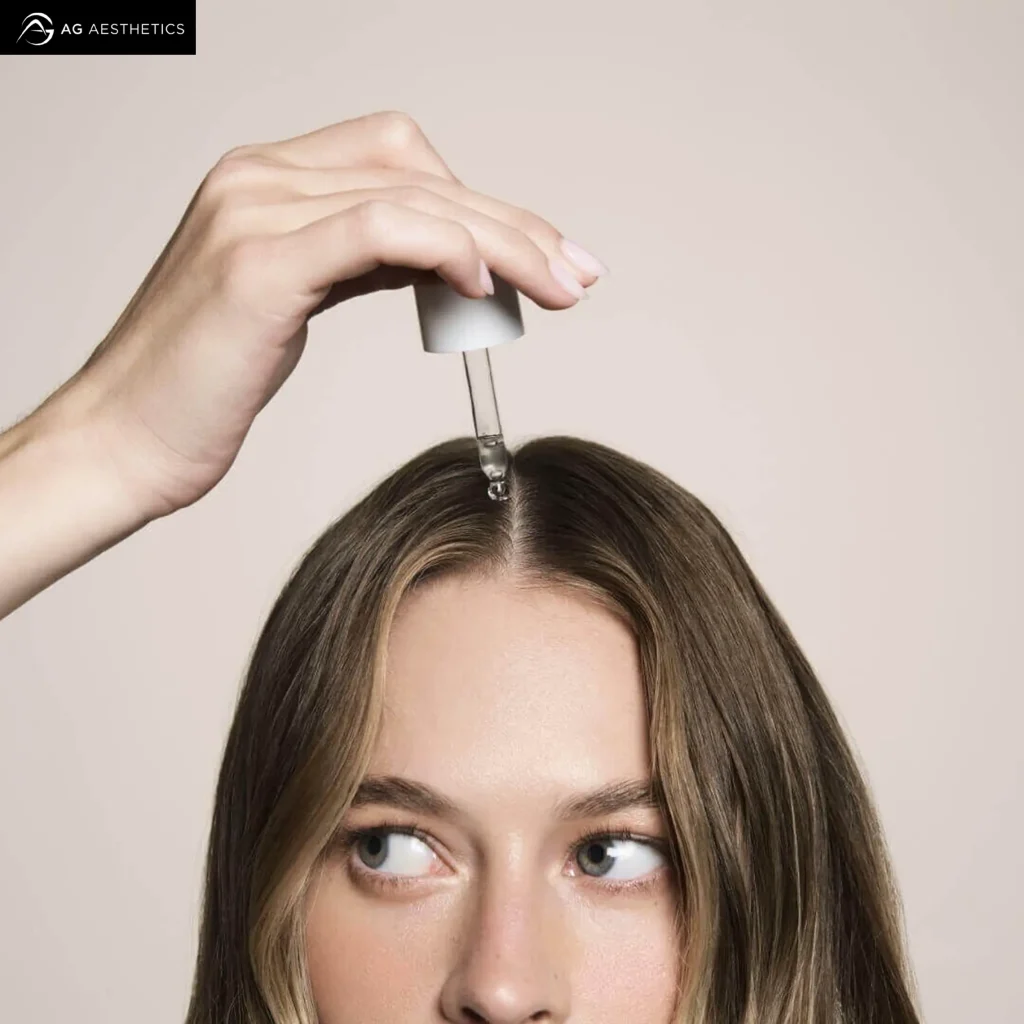
Exosome therapy is an emerging approach being investigated for hair restoration.
Exosomes are extracellular vesicles involved in cell-to-cell communication. They can carry biological molecules such as proteins, lipids, messenger RNA, and microRNA.
Researchers are investigating whether these signaling molecules can influence the biological environment around hair follicles.
Potential areas of interest include:
- Dermal papilla cell activity
- Hair follicle signaling
- Cellular communication
- Inflammatory pathways
- Angiogenesis
- Hair growth cycle regulation
- Follicular regeneration
Exosome products can come from different sources, meaning that one exosome treatment should not automatically be considered equivalent to another.
At AG Aesthetics Singapore, DE|RIVE takes a plant-based, biomimetic approach to hair and scalp support. Its formulation includes biomimetic peptides, plant extracts, vitamins, minerals, antioxidants, hydrating agents, essential oils, and natural DHT blockers.
Exosome Therapy vs. Minoxidil: The Main Difference
The biggest difference is how the treatments are designed to work.
Minoxidil is a medication that acts directly on the hair-growth process and has an established history of use for certain types of hair loss.
Exosome-based treatments are being investigated as regenerative approaches that may influence communication between cells and support the follicular microenvironment.
Feature | Exosome Therapy | Minoxidil |
Treatment type | Emerging regenerative approach | Established medication |
Main focus | Cellular signaling and follicular environment | Hair follicle growth and maintenance |
Common application | Depends on formulation and protocol | Topical application is common |
Research status | Emerging clinical evidence | Extensive clinical history |
Hair-loss research | Increasing | Extensive |
Treatment protocol | Varies considerably | More standardized |
Long-term evidence | Still developing | Much more established |
Hormonal medication | Depends on product | No |
Suitable for everyone? | No | No |
The comparison should therefore not be reduced to which treatment is “stronger.” They represent different approaches with different levels of evidence.
How Does Minoxidil Work?
The exact mechanism of minoxidil’s effect on hair growth is not completely understood.
It is thought to influence potassium channels and vascular signaling and to promote conditions that support hair follicle activity.
One important effect is associated with the hair growth cycle.
Hair follicles naturally move through:
- Anagen: active growth
- Catagen: transitional phase
- Telogen: resting phase
- Exogen: shedding
Minoxidil may help maintain follicles in the active growth phase for longer and can increase the size of miniaturized follicles in some patients.
The result can be an increase in the appearance of hair density and coverage.
How Does Exosome Therapy Work?
Exosome therapy focuses on a different biological concept.
Extracellular vesicles are naturally involved in communication between cells. Researchers are investigating whether these vesicles can deliver signaling molecules that influence cells around the hair follicle.
Studies have explored pathways involving:
- Wnt/β-catenin
- Sonic Hedgehog
- Growth factors
- Angiogenesis
- Inflammatory signaling
- Dermal papilla cells
- Hair follicle stem cells
A 2025 systematic review of clinical studies found improvements in at least one hair parameter across the exosome studies examined, including measures of hair density and thickness. However, the studies differed considerably in their exosome sources, treatment protocols, and follow-up periods.
This is why exosome therapy is considered promising but still an evolving area of hair-restoration research.
Which Has More Clinical Evidence?
This is one of the most important differences.
Minoxidil has a substantially longer clinical history.
It has been studied extensively for androgenetic alopecia and is included among established treatment options for appropriate patients.
Exosome based hair treatments are much newer.
Clinical research is growing, but studies have generally involved smaller patient populations and different formulations and treatment protocols.
A 2026 systematic review found promising clinical results for exosome-based treatments but identified limitations including small sample sizes, inconsistent protocols, differences in product preparation, and limited long-term data.
Therefore, it would not be accurate to claim that exosome therapy has stronger evidence than minoxidil.
Exosome Therapy vs. Minoxidil for Hair Thinning
Both approaches may be considered in discussions around hair thinning, but the circumstances are different.
Minoxidil is primarily used to help maintain and stimulate growth of existing hair follicles in certain forms of nonscarring hair loss.
Exosome-based treatments are being investigated for their potential effects on the follicular environment and cellular signaling.
For someone with early stage thinning, the underlying cause is particularly important.
Hair thinning can result from:
- Androgenetic alopecia
- Telogen effluvium
- Nutritional deficiencies
- Hormonal changes
- Scalp disorders
- Certain medications
- Physical or emotional stress
- Other medical conditions
A treatment designed for androgenetic alopecia may not address the underlying cause of another type of hair loss.
What About Plant Based Exosome Treatments?
Plant based exosome approaches are attracting interest because they use plant-derived biological factors rather than relying on human or animal cellular sources.
However, the term “plant based exosome” does not automatically mean that every product has the same composition or clinical evidence.
Different formulations can contain different ingredients, extraction methods, concentrations, and delivery systems.
DE|RIVE uses a plant-based and biomimetic formulation designed to support hair and scalp health. The formulation includes biomimetic peptides, plant extracts, antioxidants, vitamins, minerals, hydrating ingredients, and natural DHT blockers.
This makes it important to evaluate the specific product, rather than assuming that research involving one formulation applies to every plant-based hair treatment.
Minoxidil vs. DE|RIVE
DE|RIVE and minoxidil also differ in their overall approach.
Minoxidil is a medication specifically used for hair-loss treatment.
DE|RIVE is positioned as a plant based, hormone free hair and scalp support system designed to nourish the scalp and support the appearance of thicker, fuller hair.
The DE|RIVE Daily Hair Support System is intended for regular take-home use, while the formulation can also be incorporated into professional in-office treatments. AG Aesthetics states that DE|RIVE can be used alongside treatments such as microneedling.
These differences mean that DE|RIVE should not simply be viewed as a replacement version of minoxidil.
Can Exosome Therapy and Minoxidil Be Used Together?
Whether different hair treatments can be combined depends on the individual’s diagnosis, treatment plan, and the specific products involved.
There is research interest in combining regenerative approaches with established hair-loss treatments, but evidence for specific combinations remains limited.
Patients should not combine prescription or medical hair-loss treatments without discussing the approach with an appropriate healthcare professional.
A qualified hair-loss specialist can consider the underlying condition, current medications, scalp health, and treatment goals before recommending a combination.
Side Effects: Exosome Therapy vs. Minoxidil
The potential side effects differ because the treatments are fundamentally different.
Possible Minoxidil Side Effects
Topical minoxidil can cause:
- Scalp irritation
- Dryness
- Itching
- Redness
- Unwanted facial hair
- Temporary increased shedding when treatment begins
Some people may also experience other adverse effects.
Following the product instructions and discussing concerns with a healthcare professional is important.
Possible Exosome Treatment Side Effects
Side effects depend heavily on the specific formulation and how it is administered.
For treatments involving procedures such as microneedling, temporary effects may include:
- Redness
- Tenderness
- Mild swelling
- Scalp sensitivity
- Temporary irritation
Early clinical studies of exosome based hair treatments have generally reported good tolerability, but long-term safety data remain limited.
How Long Do the Results Take?
Neither approach should be expected to transform hair density immediately.
Hair follicles operate according to a biological growth cycle, meaning visible changes generally take time.
With minoxidil, improvement is typically evaluated over several months rather than days.
Exosome-based treatments have also been evaluated over periods ranging from several weeks to months in clinical research.
For example, one 2025 randomized controlled trial involving a plant-extract exosome formulation assessed hair outcomes after 16 weeks. The study was small, so its findings require further confirmation.
Consistency is therefore important when assessing any hair growth treatment.
Which Treatment Is Right for You?
There is no single hair-loss treatment that is appropriate for everyone.
The right approach depends on factors such as:
- The cause of hair loss
- Degree of hair thinning
- Age
- Scalp condition
- Existing medical conditions
- Current medications
- Treatment goals
- Preference for topical, procedural, or surgical approaches
- The available clinical evidence
For someone diagnosed with androgenetic alopecia, established treatments such as minoxidil may be discussed.
For someone interested in emerging regenerative approaches, exosome-based or plant-based hair treatments may also be discussed as part of a broader hair care strategy.
The first step should be understanding why the hair is thinning.
Questions to Ask Before Choosing an Exosome Treatment
If you’re considering exosome hair therapy, ask the provider:
What exactly is in the formulation?
Find out whether the product contains exosomes, extracellular vesicles, plant extracts, peptides, growth factors, or a combination of ingredients.
What evidence supports this specific product?
Research on a different exosome formulation should not automatically be interpreted as evidence for the product being offered.
How is it administered?
The treatment may involve topical application, microneedling, microinfusion, or another delivery method.
How many treatments are required?
Treatment schedules vary, so ask about the complete course rather than the cost of one session.
How will progress be measured?
Standardized photographs, trichoscopy, and hair density measurements can provide more useful information than simply comparing the appearance of hair from day to day.
Frequently Asked Questions
Is exosome therapy better than minoxidil?
There is currently not enough evidence to establish that exosome therapy is better than minoxidil. Minoxidil has a much longer history of clinical research, while exosome-based hair treatments remain an emerging area of study.
Can exosomes replace minoxidil?
There is insufficient evidence to say that exosome therapy should replace minoxidil. The two approaches work differently and have different levels of clinical evidence.
Is exosome therapy a permanent solution for hair loss?
There is currently insufficient long-term evidence to describe exosome therapy as a permanent solution for hair loss.
Is minoxidil suitable for everyone?
No. Minoxidil is used for specific types of hair loss and may not be appropriate for every person or every cause of hair shedding. A healthcare professional can help determine whether it is suitable.
Can plant-based exosomes help with hair growth?
Early research into plant-derived extracellular vesicles and plant-based formulations is promising, but clinical evidence remains limited. The specific formulation and treatment protocol matter.
Can DE|RIVE be used at home?
The Bottom Line
Exosome therapy and minoxidil represent two different approaches to hair-loss management.
Minoxidil is an established treatment with a substantial body of clinical evidence. Exosome-based hair therapy is a newer regenerative approach being investigated for its potential effects on cellular communication, hair follicle signaling, and the scalp environment.
Plant-based approaches such as DE|RIVE take this concept in a different direction by combining plant-derived ingredients and biomimetic technology to support hair and scalp health.
Rather than asking which treatment is universally better, it is more useful to consider the cause of hair loss, the evidence behind the specific treatment, the treatment method, and your individual goals.
If you’re experiencing thinning hair or increased shedding, a professional assessment can help identify the underlying cause and determine which hair-restoration options may be appropriate for you.