



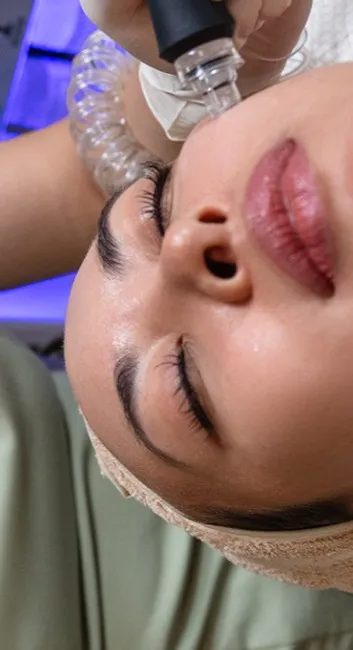
Plant-Based Exosomes for Skin Rejuvenation: How Do They Work?
Unlike conventional skincare ingredients that primarily focus on hydration, exfoliation or surface-level improvements, exosome technology explores how biological materials may communicate with cells and influence cellular processes. However, the effectiveness of an exosome-based formulation depends on its source, composition, stability, delivery method and supporting clinical evidence.
For aesthetic clinics in Singapore, understanding plant-based exosomes can help practitioners evaluate new skincare technologies and determine how they may fit into professional treatment protocols.
In this guide, we explain what plant-based exosomes are, how they differ from conventional skincare ingredients, their potential benefits for skin rejuvenation and what to consider when choosing an exosome-based aesthetic formulation such as EXO|E.
What Are Plant-Based Exosomes?
Plant-based exosomes are commonly discussed in skincare as part of a broader group of plant-derived extracellular vesicles and exosome-like nanovesicles. These microscopic, membrane-bound structures can carry biological materials, including lipids, proteins and other molecules.
In biological systems, extracellular vesicles are involved in communication between cells. Researchers are investigating plant-derived vesicles to understand how their molecular contents may interact with human cells and whether they could have applications in skin health and cosmetic science.
The terminology requires some care. Not every plant-derived nanoparticle is technically an exosome, and plant extracts are not the same as isolated extracellular vesicles. The precise identity of the material depends on how it is sourced, isolated and characterised.
In aesthetic skincare, plant-based exosome technology is being explored for its potential to complement skin-rejuvenation treatments and support visible improvements in skin quality.
Nevertheless, research findings about plant-derived vesicles should not automatically be interpreted as evidence that every commercial exosome product delivers the same results.
How Do Exosomes Communicate with Skin Cells?
Think of the skin as a constantly active environment in which different cell types perform specialised functions.
Fibroblasts, for example, contribute to the production of collagen and other components of the extracellular matrix. These structural components help maintain the skin’s firmness, elasticity and overall appearance.
Cells communicate through a range of signalling mechanisms. Extracellular vesicles are one part of this process, transporting biological materials that may influence how recipient cells respond.
Exosomes are therefore different from a conventional single-ingredient skincare product. Rather than being defined by one active molecule, an extracellular vesicle contains a membrane and associated molecular cargo.
Researchers are investigating whether plant-derived vesicles can influence processes relevant to skin rejuvenation, including oxidative stress responses, inflammation and tissue repair. These findings remain dependent on the specific vesicle preparation and experimental conditions, with further human clinical research needed to establish their practical benefits in aesthetic skincare.
How Do Plant-Based Exosomes Work for Skin Rejuvenation?
Plant-based exosome technology is being investigated for its potential to support biological processes associated with skin health. Its proposed applications involve several interconnected factors, from the molecular contents of vesicles to their stability and interaction with the skin.
1. Supporting Cellular Communication
Extracellular vesicles can transport molecular cargo between cells in biological systems. Depending on their composition, this cargo may influence signalling pathways and cellular responses.
Plant-derived vesicles are being studied to determine whether their contents can interact meaningfully with human skin cells. The extent of this interaction depends on the source material, vesicle characteristics and biological environment.
For aesthetic applications, the important question is whether a specific formulation can demonstrate a measurable benefit in the intended setting. General research into cellular communication does not, by itself, prove that a topical product stimulates skin regeneration.
2. Exploring Collagen and Skin Firmness
Collagen is an essential structural protein that helps maintain skin firmness. Changes in collagen organisation and production contribute to the visible signs of skin ageing, including fine lines and reduced elasticity.
Some laboratory and preclinical research into plant-derived extracellular vesicles has explored their potential effects on cellular processes associated with tissue repair and skin structure.
However, the effects of a particular plant-derived preparation cannot be assumed to apply to every commercial product. Claims relating to collagen production, skin tightening or wrinkle reduction should be supported by relevant evidence for the specific formulation.
3. Investigating Antioxidant Activity
Oxidative stress occurs when reactive molecules exceed the body’s ability to manage them effectively. Environmental factors, including ultraviolet radiation and pollution, can contribute to oxidative stress associated with visible skin ageing.
Certain plant-derived materials contain compounds that are being studied for their antioxidant properties. Researchers are also investigating whether plant-derived extracellular vesicles may carry bioactive components relevant to these processes.
The antioxidant potential of a plant extract, however, is not automatically equivalent to the biological activity of an isolated vesicle preparation. Product-specific testing is needed to understand the ingredients involved and the effects that can reasonably be expected.
3. Investigating Antioxidant Activity
Skin recovery involves a coordinated series of biological processes, including inflammation, cell migration and tissue remodelling.
Plant-derived extracellular vesicles are being investigated for their possible role in these processes, particularly in laboratory models of skin injury and tissue repair.
Although these findings are promising areas of research, evidence from laboratory or animal studies does not establish that an exosome-based cosmetic formulation accelerates recovery after microneedling, laser treatment or other aesthetic procedures in humans.
For professional use, treatment compatibility, application timing and safety must be established for the individual product and procedure.
Plant-Based Exosomes vs Conventional Exosomes: What Is the Difference?
Exosomes and other extracellular vesicles can originate from different biological sources. Research into aesthetic applications has included both mammalian cell-derived and plant-derived vesicles.
Their composition, production methods and biological properties can differ significantly.
Feature | Plant-derived vesicles | Mammalian cell-derived vesicles |
Biological source | Plant material | Mammalian cells |
Molecular composition | Influenced by plant species and processing | Influenced by cell type and culture conditions |
Research interest | Bioactive delivery, antioxidant activity and skin-related applications | Cellular signalling, tissue repair and regenerative applications |
Manufacturing considerations | Plant sourcing, extraction, purification and characterisation | Cell sourcing, culture, purification and quality control |
Evidence requirements | Product-specific safety and efficacy testing | Product-specific safety and efficacy testing |
Plant-derived vesicles may offer practical advantages for certain manufacturing approaches, including opportunities for scalable sourcing. However, plant origin does not automatically guarantee greater stability, improved safety or superior results.
Both categories require appropriate characterisation, quality control and evidence supporting their intended use.
Plant-Based Exosomes vs Peptides: How Do They Compare?
Peptides and exosomes are often discussed together in advanced skincare, but they are fundamentally different.
Peptides are short chains of amino acids. Certain peptides are used in cosmetic formulations because of their potential to support specific skincare objectives, such as improving the appearance of fine lines or maintaining hydration.
Exosomes, by contrast, are membrane-bound extracellular vesicles containing molecular cargo. Their biological role is associated with the transport of materials involved in cellular communication.
The distinction can be understood simply:
- Peptides: Specific molecules that may have defined biological or cosmetic functions.
- Extracellular vesicles: Membrane-bound structures carrying a combination of biological materials.
- Plant extracts: Mixtures of compounds obtained from plant material, which are not necessarily extracellular vesicles.
These approaches are not interchangeable, and one is not automatically more effective than another. Their value depends on the formulation, intended use and available evidence.
Some aesthetic formulations combine different ingredient technologies to address complementary skincare objectives. When evaluating such products, practitioners should examine the evidence for the finished formulation rather than relying solely on the reputation of an individual ingredient.
Why Do Stability and Delivery Matter?
An advanced skincare ingredient can only perform as intended if it remains sufficiently stable and is delivered appropriately.
Extracellular vesicles can be sensitive to factors such as temperature, storage conditions, processing methods and formulation composition. These factors may affect their structural integrity and the properties of their molecular contents.
For plant-based exosome technology, manufacturers may use different approaches to extraction, purification, stabilisation, packaging and storage. A dry formulation, for example, may be designed to limit certain forms of degradation during storage, but its actual performance depends on the technology and supporting stability data.
Delivery is another important consideration. The skin’s outermost layer provides a protective barrier, which limits the penetration of many substances. The behaviour of a topical formulation depends on factors such as particle characteristics, ingredient composition, application method and the condition of the skin.
Professional treatments may incorporate specific application sequences or delivery technologies. However, a product intended for topical use on intact skin should not automatically be used during microneedling, injected or applied to compromised skin.
Aesthetic practitioners should follow the manufacturer’s instructions and confirm that the product is suitable for the intended procedure.
What Are the Potential Benefits of Plant-Based Exosomes for Skin Rejuvenation?
Plant-derived extracellular vesicles are an emerging area of cosmetic research. Their potential applications are being explored in several areas relevant to skin quality.
Improved Appearance of Skin Texture
Researchers are investigating whether certain plant-derived vesicles can influence biological processes associated with tissue maintenance and repair. These findings may inform future skincare applications, although improvements in human skin texture need to be demonstrated through appropriate clinical studies.
Support for Skin Hydration
Hydration plays an important role in maintaining a smooth, supple-looking complexion. Some plant-derived materials and vesicle-based formulations are being investigated for their potential to support hydration-related outcomes.
The actual effect depends on the ingredients and the finished formulation. A product’s moisturising performance should be assessed using relevant product-specific evidence.
Skin Radiance and Even-Looking Tone
Uneven skin tone and dullness can be influenced by several factors, including pigmentation, surface texture, dehydration and environmental exposure.
Plant-derived bioactive materials are being investigated for their potential effects on processes associated with pigmentation and oxidative stress. However, claims that an exosome product brightens skin or reduces pigmentation require evidence specific to the formulation and intended application.
Skin Radiance and Even-Looking Tone
Plant-based exosome technology may be considered an emerging option within professional skincare research and development.
For aesthetic clinics, the key consideration is whether a particular product has suitable evidence, a clearly defined intended use and appropriate safety information. It should be evaluated as part of an individualised skincare approach rather than as a guaranteed solution for every sign of skin ageing.
How Does EXO|E Fit into Plant-Based Exosome Technology?
EXO|E is a plant-based exosome technology formulation offered by AG Aesthetics. Its product information describes a combination of plant-based secretory factors, liposomes, growth factors and anti-stressing components intended to complement professional aesthetic treatments.
These components represent different approaches to skincare formulation.
Plant-based secretory factors are associated with plant-derived bioactive technology. Liposomes are lipid-based structures used in formulations to encapsulate or deliver selected ingredients. Growth factors are signalling proteins involved in biological processes, while anti-stressing components are intended to support the skin in response to selected stressors.
The presence of these components does not, by itself, establish the clinical effectiveness of the finished product. Their sources, concentrations, stability and interactions should be assessed through the manufacturer’s technical documentation.
For aesthetic clinics in Singapore, EXO|E may be worth evaluating as part of a professional skin-revitalisation offering, provided that its intended use and supporting evidence align with the clinic’s treatment protocols.
What Should Clinics Know About Safety and Evidence?
Plant-based does not automatically mean risk-free. Cosmetic ingredients and bioactive formulations may cause irritation or other unwanted reactions, depending on their composition and how they are used.
Similarly, evidence about plant-derived extracellular vesicles in laboratory studies does not establish the safety or effectiveness of every finished product.
The research field is developing, and published studies vary in their plant sources, extraction methods, particle characterisation and testing models. More well-designed human studies are needed to establish the clinical benefits of many plant-derived vesicle technologies.
For EXO|E, clinics should rely on the product’s own safety data, technical documentation and approved instructions rather than general claims about exosomes.
What Should Clinics Consider Before Using EXO|E?
Before incorporating EXO|E into a professional skincare protocol, practitioners should review:
- Formulation details: Verify the product’s ingredients, plant sources and the precise nature of its exosome-related technology.
- Clinical evidence: Review available studies supporting the product’s stated benefits.
- Application method: Confirm whether the product is intended for topical application or another specifically authorised route.
- Treatment compatibility: Check whether its use alongside microneedling, radiofrequency or other procedures is supported by the manufacturer’s instructions.
- Safety information: Review contraindications, storage requirements, handling instructions and adverse-event information.
- Regulatory requirements: Confirm the product’s applicable regulatory status and permitted claims in Singapore.
These considerations help practitioners make informed decisions and communicate realistic expectations to patients.
To learn more about the formulation and its intended applications, visit the EXO|E product page by AG Aesthetics.
Are Plant-Based Exosomes Suitable for Every Skin Type?
Not necessarily. Suitability depends on the individual formulation, its ingredients, the intended application and the person’s skin condition.
A product containing plant-derived ingredients can still cause irritation or an unwanted reaction. Likewise, a formulation designed for use on intact skin may not be suitable for application immediately after an aesthetic procedure.
Before recommending an exosome-based product, practitioners should assess the patient’s skin concerns, sensitivities, treatment history and expectations. They should also review the product’s instructions and any relevant contraindications.
The term plant-based should not be treated as a guarantee of safety or suitability for all patients.
Frequently Asked Questions About Plant-Based Exosomes
Do Plant-Based Exosomes Really Work for Skin Rejuvenation?
Plant-derived extracellular vesicles are being investigated for their potential applications in skin repair, antioxidant activity and tissue regeneration. However, the evidence varies by plant source, preparation and application. The effectiveness of a particular commercial product should be established through product-specific testing and appropriate clinical studies.
Are Plant-Based Exosomes the Same as Plant Extracts?
No. Plant extracts are mixtures of compounds obtained from plant material, whereas extracellular vesicles are membrane-bound structures that carry biological materials. Their composition and properties differ, and an extract should not automatically be described as an exosome preparation.
Can Plant-Based Exosomes Help Reduce Fine Lines?
Some research explores plant-derived vesicles in relation to cellular processes associated with skin ageing. However, this does not prove that every plant-based exosome product reduces fine lines. Claims about visible wrinkle reduction should be supported by appropriate clinical evidence for the finished formulation.
Can Plant-Based Exosomes Be Used After Microneedling?
Only when the specific product is suitable for that application and its instructions permit it. Products intended for topical use on intact skin should not automatically be applied to skin with
microchannels or used for enhanced delivery. Practitioners should follow the product’s instructions and the procedure’s clinical protocol.
What Is the Difference Between Plant-Based Exosomes and EXO|E?
Plant-based exosomes describe a broad area of technology involving plant-derived extracellular vesicles or related structures. EXO|E is a specific skincare formulation that its product information describes as incorporating plant-based secretory factors, liposomes, growth factors and anti-stressing components. The exact technology and expected performance should be assessed using EXO|E’s own technical documentation.
Are Plant-Based Exosomes Better Than Peptides?
Neither is automatically better. Peptides and extracellular vesicles have different structures and potential functions. Their effectiveness depends on the formulation, intended application and supporting evidence. Some skincare approaches may combine different ingredient technologies to address complementary objectives.
Is EXO|E Suitable for Every Skin Type?
The product information describes EXO|E as suitable for a range of skin types and conditions. Individual suitability still depends on skin sensitivity, the patient’s treatment history, the intended application and the product’s contraindications. A clinician should assess suitability before use.
The Future of Plant-Based Exosomes in Aesthetic Skincare
Plant-based exosomes and related extracellular vesicle technologies are attracting research interest because of their potential role in bioactive delivery, cellular communication and skin-related applications.
However, promising laboratory findings should be distinguished from established clinical benefits. Manufacturing quality, stability, delivery, safety and product-specific evidence remain essential when evaluating an exosome-based skincare formulation.
For aesthetic clinics in Singapore, the most useful approach is to assess emerging technologies carefully, understand the evidence behind their claims and incorporate products only when their intended use is appropriate for the treatment protocol.
EXO|E offers an opportunity for clinics to explore a plant-based skin-revitalisation formulation within a professional skincare setting. Reviewing its formulation and technical documentation is the logical next step for practitioners considering its suitability.
Interested in learning more about EXO|E? Visit the EXO|E product page by AG Aesthetics to explore its intended applications and request further product information.